
Yes. Muscle Pain is in Cornerstone Chiropractic Center’s conditions list, and Fibromyalgia is listed as well.
Conditions addressed
Muscle Pain in Virginia Beach.
Knots, trigger points, and muscles that ache long after the work is done — muscle pain has its own set of causes and its own set of tools.
What it is
Understanding muscle pain.
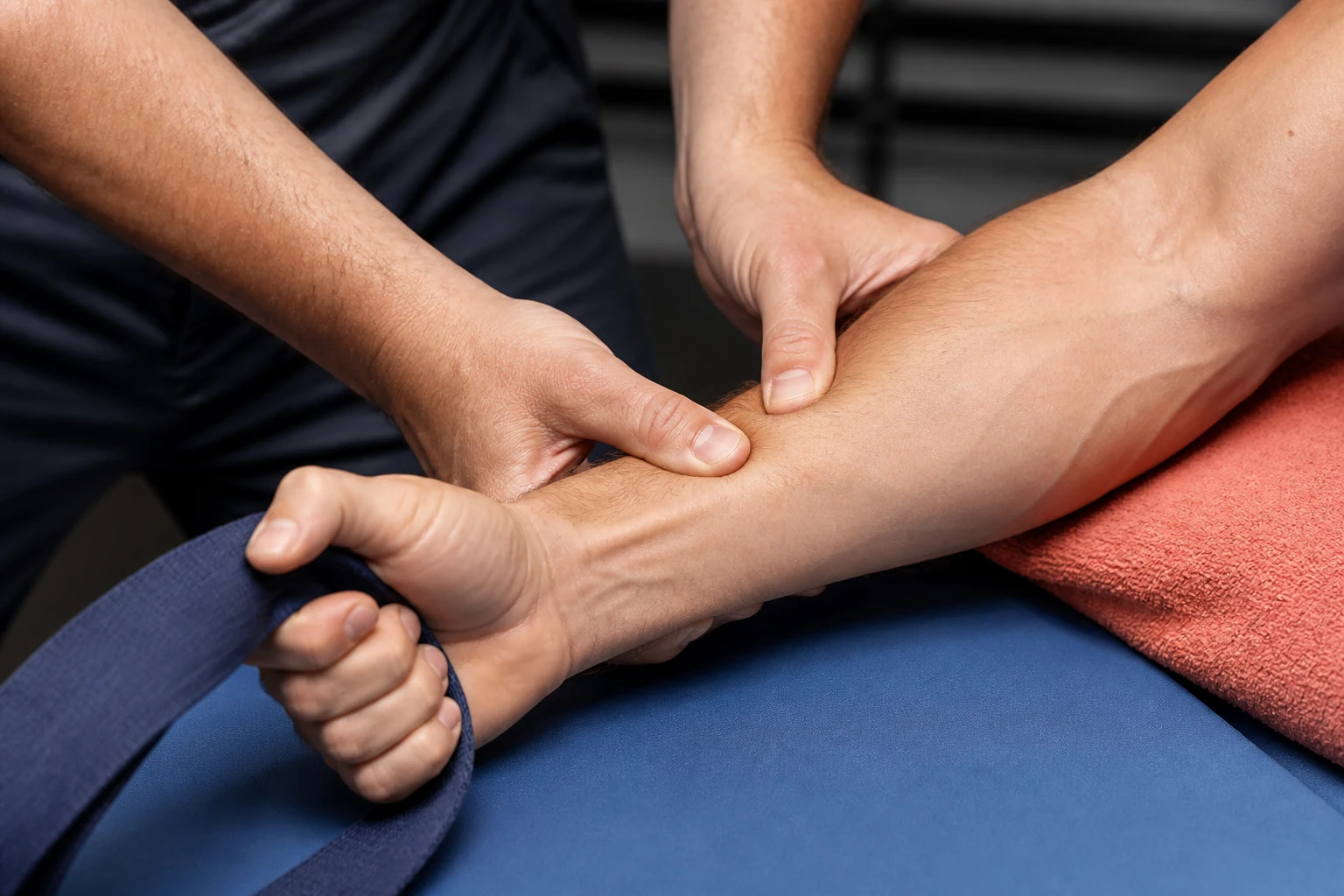
Muscle pain shows up as soreness, tightness, and tender points that can ache locally or refer pain elsewhere. Overuse, sudden strain, postural load, and stress are everyday causes; the practice’s conditions list also includes fibromyalgia, a condition defined by widespread muscle pain and tenderness. Muscles also commonly tighten to guard an underlying joint problem.
How it shows up
Common presentations.
Patterns patients describe when they call about muscle pain.
- Tight, ropy bands or tender knots you can feel
- Soreness that lingers well beyond normal post-exercise aching
- Pain that refers — a trigger point in the shoulder felt as an arm ache
- Muscles that fatigue quickly or feel weak without injury
- Widespread tenderness on both sides of the body
The office approach
How Dr. Bresnahan approaches it.
Soft tissue care is where the practice’s technique list is deepest: Active Release Technique takes shortened tissue through motion under tension, Graston Technique uses instruments to address scarred and restricted tissue, and dry needling targets trigger points directly. When restricted joints are driving the muscle guarding, spinal adjustments address that side of the problem.
Sudden severe muscle pain with major swelling, muscle pain with dark urine after a crush injury or extreme exertion, or muscle weakness that steadily worsens should be evaluated medically first.
Questions
Straight answers about muscle pain.
Dry needling uses a thin filament needle aimed at specific muscular trigger points to release them. It is a Western, anatomy-based technique — related in tooling but different in purpose from traditional acupuncture.
Recurring tightness often guards an underlying joint restriction or repetitive stress. That is why the examination looks past the sore spot to what keeps reloading it.